
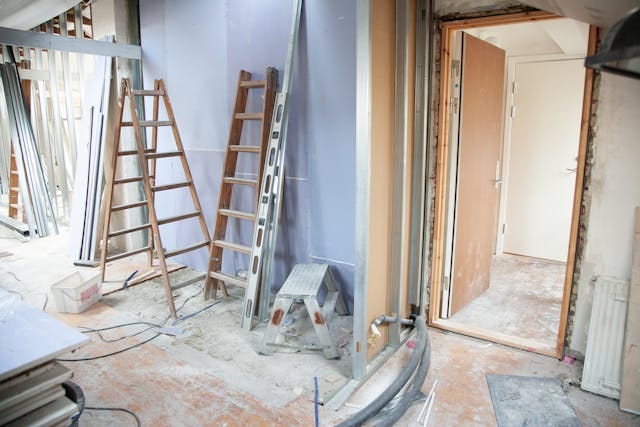
Step into a “restored” home and most people see the obvious—polished floors, fresh paint, and tasteful fixtures. That’s the show. But anyone who’s spent years in high-stakes construction, heritage preservation, or investment-grade renovations knows the real story isn’t visible. It’s invisible. The systems beneath the surface—the structural precision, environmental intelligence, and protective measures—determine whether a home thrives or quietly fails. Modern restoration is not decoration; it’s engineering intelligence into every layer, turning ordinary renovations into living, high-performance environments.
Table of Contents
1. Pillar 1: Structural Integrity and Substrate Physics — the “Bones”
The foundation is radical. Luxury finishes crumble not because the materials fail but because the substrate was ignored. Home Restoration mastery starts beneath the surface. Experts understand unexplained cracked tiles, buckling hardwood, or peeling paint—are rarely caused by the finish itself. They are caused by the substrate (the material underneath).
Defining interventions:
- Substrate Planarity (1/8-inch Rule): Floors and cabinetry are only as precise as their base. A 1/8-inch variance over 10 feet is the difference between perfection and cracked tile in two years.
- Fastener Pattern Mapping: In drywall, consistency matters. Strategic screw placement prevents nail pops, structural shifts, and the illusion of quality fading after a year.
- Moisture-Vapor Priming: Concrete slabs aren’t surfaces—they’re living systems. A calcium chloride test followed by a high-pressure vapor barrier ensures moisture doesn’t betray the finishes above.
This pillar is discipline made tangible, where invisible engineering guarantees longevity.
2. Pillar 2: The Hygrothermal Envelope — the “Breath”
Your home should efficiently manage flow of air, heat, and moisture. Walls aren’t walls—they’re living membranes. Restoration without understanding airflow and vapor movement is cosmetic theater. During upgrades, construction, homeowners often mistakenly treat walls like plastic bags—trying to seal them completely to keep air out. This is a “ticking time bomb.”
Key radical steps:
- Vapor-Open Permeability for historic buildings, masonry, and lime-plastered walls: Lime-based and mineral coatings let historic wood and masonry breathe, preventing rot that traditional paint traps inside.
- Thermal Bridging Mitigation: Insulate every window-to-wall junction. Without it, dust streaks and condensation silently erode interiors.
- Flashing Continuity: End dams on window sills aren’t optional—they force water out, saving decades of structural headaches.
This is restoration that respects the building as a living organism, not a static box.
3. Pillar 3: Environmental Ergonomics — the “Flow”
Homes are for humans, before they become for show. True restoration designs for vitality, safety, and daily life performance.
Vital expert interventions:
- Circadian-Aligned Circuitry: Lighting is biological. 5000K daylight for energy, 2700K evening warmth for sleep. Automatic adjustments turn the home into an ally of human rhythm.
- Acoustic Decoupling: Resilient channels and “Green Glue” reduce noise transfer 50–70%, turning ordinary rooms into high-performance acoustic sanctuaries.
- Tactile Friction Coefficients: Floors engineered for slip safety preserve both beauty and life—especially when it is wet or contaminated.
Here, restoration is about systems that serve humans first, turning aesthetics into performance.
4. Pillar 4: The Protective “Shield” — the “Protection”
Even perfect design fails without foresight. Masterful restoration anticipates disasters before they arrive.
Strategic layers include:
- Non-Destructive Testing (NDT): Blends tech and skilled visual analysis to reveal hidden structural weaknesses-corrosion, cracks, or voids, before they manifest.
It involves using thermal imaging and moisture scanning without tearing into walls or dismantling perfectly good finishes.
- Antimicrobial Additives like Silver or Zinc compounds: These embedded in renovation materials like plaster formulations and paint create invisible barriers to bacterial growth.
- Dual pumps, battery backups, and WiFi alerts ensure floods never undo your investment.
A infusion of such a strategic shield components defines a high-performance restoration. You move away from “reactive” repair—where you fix things only after they break—to “proactive” infrastructure management.
5. Pillar 5: The Cognitive Interface — the “Intelligence”
Modern restoration isn’t just about what a home is made of; it’s about how it responds to the people inside it. True “Smart” restoration isn’t about voice-activated lights—it’s about systems that optimize the home’s performance without the user ever touching a switch.
Insightful Interventions:
- Predictive Telemetry: Beyond simple alarms, this involves integrating sensors that monitor the “health” of the home’s envelope. Integrated sensors continuously audit the climate inside your wall assemblies and monitor the structural stability of key beams and provide real-time data.
- Contextual Automation: Instead of rigid schedules, the home uses occupancy-based and environment-aware logic. If the air quality drops or humidity spikes, the HVAC system dynamically adjusts its cycles to scrub the air or dehumidify, maintaining an “optimum cognitive zone” without human intervention.
- Human-Centric Fail-Safes: Intelligent design represent the final bridge between high-tech “smart” home features and actual, reliable living. It ensures that technology never creates a “hard barrier.” If a smart system fails, the house must default to a high-performance mechanical state (e.g., passive ventilation paths), ensuring the inhabitant is never “locked out” or left vulnerable by a software glitch.
The Radical Truth: A home should be as responsive as a high-end vehicle. The Cognitive Interface ensures the house is always “on,” constantly optimizing its internal environment so the occupant can focus entirely on their work, rest, or family.
In essence, these strategies help transition from a mare surface-level renovation which is a depreciating aesthetic fix, to systemic asset engineering, which is a value-appreciating structural upgrade. By working with a builder who understands critical restoration pillars—foundations, air circulation, spatial flow, and shield—you achieve a collective result that a standard “repair” cannot match. That way, you move beyond what is “seen” (paint and tile) to what is “functional” (physics and ergonomics), to create an environment that acts as a Force Multiplier for the inhabitant’s health, wealth, and peace of mind.